By Josh Peacock In Events | March 2026
Recap: Customer Support Summit NYC is in the books for 2026!
Two packed days in New York City brought together some of the sharpest minds in customer support for practical conversations centered around the evolving role of support in modern organizations.
The Customer Support Summit NYC brought together operators and leaders from across the support and CX landscape for two days of candid, practitioner-led conversations on AI, metrics, and leadership — all with a clear focus on positioning support as the value center it truly is. Modern teams are navigating rapid product evolution, rising customer expectations, and the expanding intersection of AI and human expertise, all while being asked to do more with less. It’s not an easy mandate — but it is an exciting one — and the insights shared came directly from those in the trenches, building, scaling and rethinking what great support looks like today.
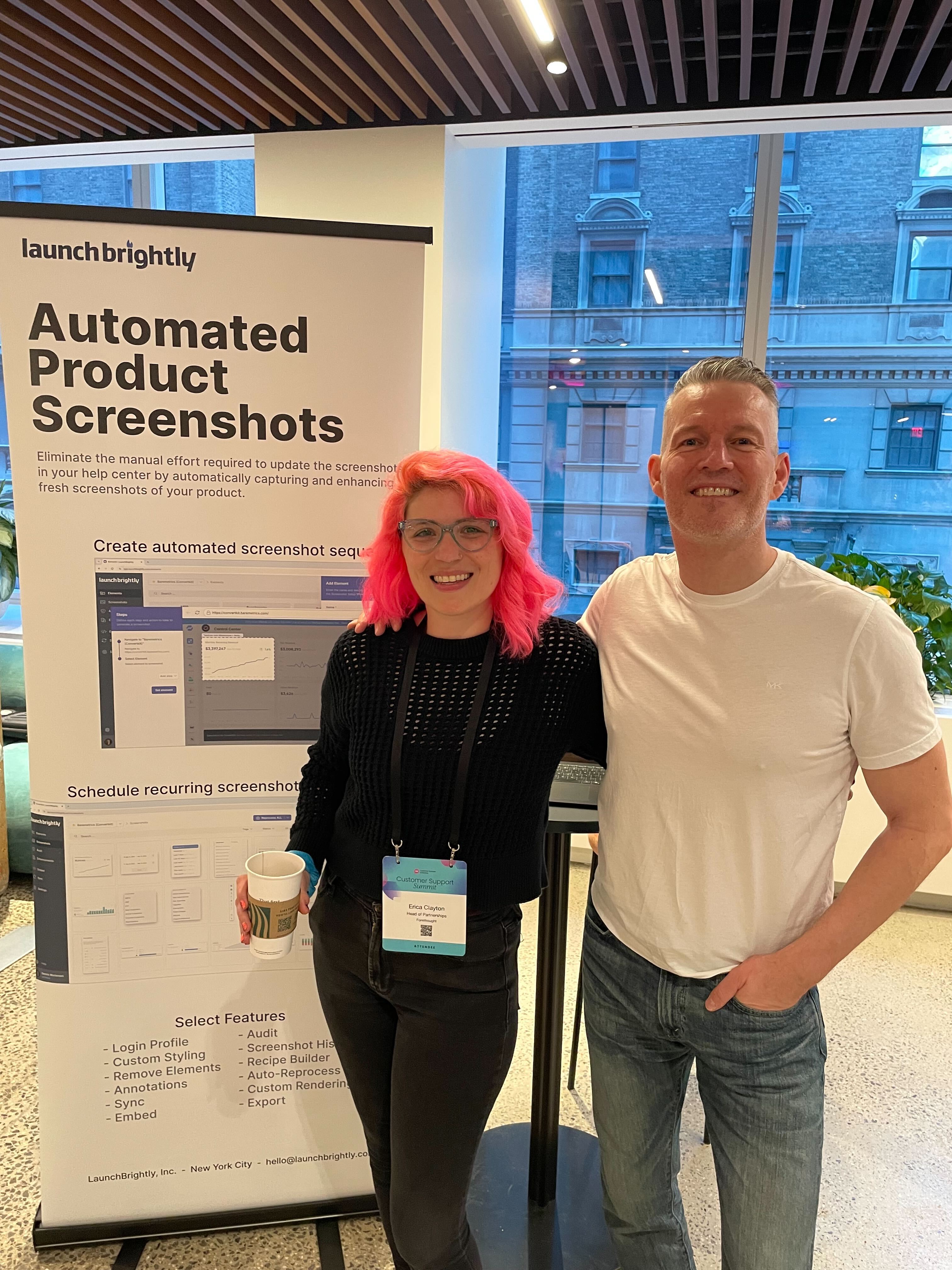
We can’t thank the incredible lineup of speakers enough for the generosity, candor and depth of insight they brought to the stage. Their willingness to share real-world lessons — wins, missteps and everything in between — is what makes events like this so valuable.
Below is a brief summary of some of the sessions that particularly stood out to us:
AI that works for everyone: Scaling support without sacrificing experience
Panel: AJ Vaughn, Jyotiram Pasupalak, Francesca Oliva
This panel focused on designing AI systems that work for both agents and customers. The takeaway: efficiency alone isn’t enough. AI must reduce friction internally while making the customer journey feel effortless. Panelists shared how they’re embedding AI into workflows to streamline operations, accelerate response times and personalize interactions — without overwhelming teams or eroding trust. The discussion emphasized thoughtful system design, clear guardrails and human-centered implementation. AI isn’t about replacing agents; it’s about freeing them to focus on higher-value, higher-empathy work while technology handles the repetitive lift.
Rewriting the support playbook: Turning data, signals, and insights into proactive action
Presented by: Joep Everts
Joep’s keynote challenged teams to move beyond reactive support. The future is predictive. By connecting fragmented data sources into a unified view, teams can identify behavioral signals, anticipate friction, and intervene before tickets are created. The session explored how to build a single source of truth, align cross-functional stakeholders around shared metrics, and transform insights into action. The result? Faster resolutions, stronger CSAT, and measurable business impact. Proactive support isn’t just operationally smarter — it fundamentally shifts how customers experience your brand.
From cost center to growth engine: Proving the revenue power of support
Panel: Sarah Sherwood, Sarah Baker, Anthony Diorio
This panel tackled a question every support leader faces: how do you prove impact? The conversation centered on practical frameworks for aligning support metrics to retention, expansion and lifetime value. Leaders discussed how to translate operational KPIs into executive-ready narratives that resonate with finance and revenue teams. The key theme: when support data is structured correctly, it becomes a powerful growth lever. The most forward-thinking organizations are quantifying the revenue influence of service — and using that insight to reposition support as a strategic driver of long-term value.
Closing the loop: Turning support insights into product innovation
Panel: Sabina Rana, Tammy Kernz
Customers constantly signal what’s broken, confusing or missing — but too often that feedback dies in ticket queues. This session explored how to operationalize the feedback loop between Support, Product and Engineering. The panelists shared strategies for structuring VoC programs, categorizing insights at scale, and creating accountability for follow-through. When feedback loops are formalized, they accelerate feature improvements, reduce repeat friction, and align teams around customer reality. Support isn’t just solving issues — it’s informing roadmap decisions and shaping better products.
Ultrafast, unforgettable: Designing a support model where AI and humans thrive together
Presented by: Thiago D. Garcia
Speed and empathy are not mutually exclusive. Thiago outlined a hybrid model where AI accelerates workflows while humans own judgment, nuance and trust-building moments. The session explored redefining team roles around creativity and complex problem-solving, while automation handles routing, triage and repetitive interactions. The core idea: customers remember how you make them feel. AI can make support ultrafast — but humans make it unforgettable. Designing systems where each complements the other is the path to scalable excellence.
Agentic support in the real world: Lessons from building AI that fails, recovers, and scales
Presented by: Burak Kebapci
Burak delivered one of the most practical AI sessions of the event. Rather than glossing over complexity, he shared real-world lessons from deploying agentic systems — including failures. Attendees walked away with a clear categorization of support-focused AI agents, examples of where automation breaks down, and patterns for recovery. Human-in-the-loop design, guardrails, and reliability frameworks were central themes. Successful AI transformation is iterative — it requires disciplined architecture, accountability and a willingness to learn from production realities.
Building the future of support: Operating models, metrics, and momentum for AI transformation
Presented by: Anuj Pandey
AI transformation isn’t a leap — it’s a structured evolution. Anuj mapped out a three-stage journey: individual productivity gains, business process automation, and fully agentic operations. He emphasized the need for evaluation frameworks, experimentation discipline, and strong knowledge management foundations. A key concept was the “Transformation Office” — a dedicated structure to align stakeholders, measure progress, and maintain momentum. AI adoption succeeds when it’s operationalized with governance, metrics, and cross-functional accountability.
Cultures that keep: Investing in the people behind exceptional support
Fireside chat: Nancy Coluccio Kennedy, Amanda Harris
Technology evolves quickly. Culture determines whether teams keep up. This fireside chat highlighted the importance of investing in agent capability, confidence, and career growth. From upskilling in AI-enabled environments to building clear development paths, the focus was on long-term retention and empowerment. Empowerment isn’t just autonomy — it’s structured support, meaningful recognition, and leadership that prioritizes people. World-class support experiences begin with engaged, equipped teams.
Redefining success: KPIs for human-AI collaboration in customer support
Presented by: Laxmin Upadhya
Traditional metrics fall short in an AI-augmented world. Laxmin outlined a modern KPI framework that measures impact, not just activity. Beyond handling-time and deflection rates, teams must track automation accuracy, quality outcomes, agent empowerment and continuous learning loops. The session emphasized balancing efficiency with experience — ensuring AI improves both productivity and customer trust. Measurement shapes behavior, and redefining success is essential to sustaining meaningful transformation.
Closing the knowledge gap: What customer service teams need before AI
Panel: Hugo Ramadier
Before deploying AI, teams must fix knowledge. This panel underscored the importance of structured, accurate, centralized documentation as the foundation for automation success. Without a reliable source of truth, AI amplifies inconsistency. The discussion focused on knowledge audits, governance processes, and content hygiene as prerequisites for intelligent systems. AI doesn’t compensate for fragmented documentation — it exposes it. Building strong knowledge infrastructure is the first step toward scalable automation.
The AI playbook for B2B support team
Presented by: Marty Kausas
Marty provided a tactical walkthrough of how B2B teams can implement AI today. From automated ticket categorization and prioritization to runbook automation and AI-assisted knowledge creation, the session emphasized practical execution. A key insight: AI initiatives should directly support workflow optimization, not exist as standalone experiments. When integrated thoughtfully, AI reduces pre-work, surfaces knowledge gaps, and increases consistency across complex B2B environments.
Mastering internal team dynamics
Interactive roundtables: Josh Teller, Erick Casanova
These roundtables shifted the focus inward — exploring change management during AI adoption, global team alignment and unlocking individual strengths within support organizations. Participants discussed building trust in new tools, balancing regional flexibility with global consistency, and supporting agent career mobility. The recurring theme: transformation succeeds when people feel included, heard, and equipped. Operational excellence begins with strong internal dynamics.
Back to the future: Building an AI support system for simplicity, speed, and empathy
Presented by: Niraj Rout
Niraj closed the event by challenging outdated AI narratives. Instead of complex, engineer-heavy systems, he advocated for plug-and-play solutions designed for support teams. The session explored why many AI projects fail — overcomplication, unclear value, poor adoption — and how to design systems that amplify human teams rather than replace them. The future of AI in support is simpler, faster, and more empathetic — if built with clarity and intention.
The Big Takeaway
Across every session, one thing was clear: Support is stepping into its role as a data-rich command center for growth. AI is accelerating workflows, metrics are becoming more sophisticated, and knowledge is being treated as critical infrastructure. At the same time, support leaders are leaning into strategic conversations around retention, expansion, and product innovation with greater confidence than ever. If NYC was any indication, the future of Support is proactive, measurable, and deeply human — even in an AI-first world.
Until the next one!